

Reliable energy is the silent engine of industrial production. But when facility managers plan their electrical systems, the differences between types of equipment often get lost in the procurement process.
This miscalculation carries a heavy price tag. According to recent data, unplanned downtime costs industrial manufacturers an estimated $50 billion annually. Most of the time, the problem is with the infrastructure that feeds it.
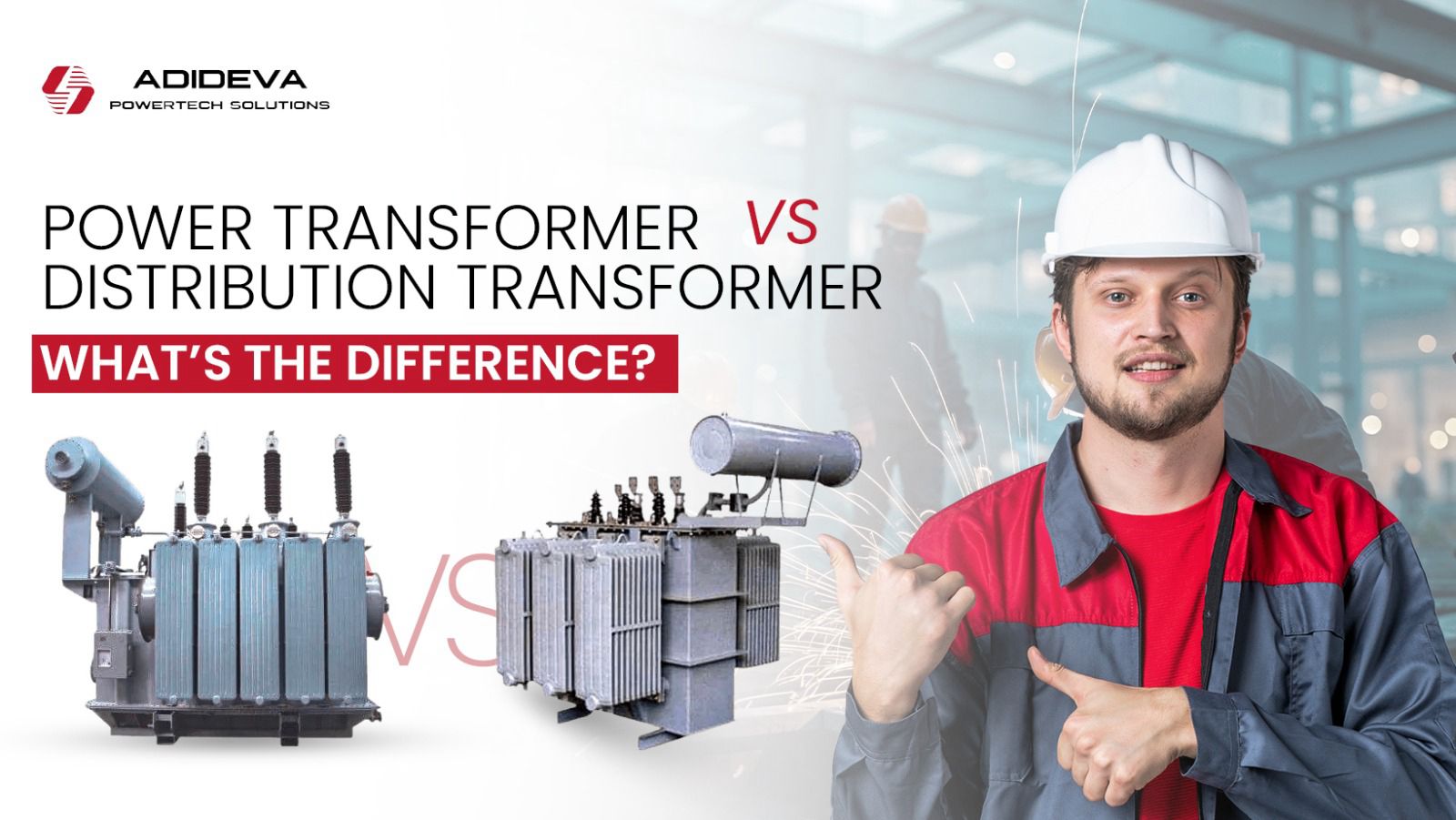
That’s where the importance of selecting the right transformer comes in. In this blog, we will break down the difference between power transformer and distribution transformer technologies so as to help you choose the right fit for your project needs.
Why Power Transformers Matter in Industrial Environments
Power transformers play a role in industrial electrical distribution networks. Their main purpose is to adjust voltage levels and guarantee that power is delivered to devices safely and effectively. Within settings, slight variations in voltage can cause unplanned outages, harm costly equipment, and pose significant safety hazards.
A chosen industrial power transformer ensures steady and efficient power delivery across the entire facility. It enhances equipment longevity by minimizing strain, decreases the need for maintenance, boosts safety during operations, and guarantees uniform productivity throughout all operations. Recognizing the significance of power transformers in environments enables plant supervisors and engineers to emphasize dependability and quality when selecting equipment.
What is a Power Transformer?
A power transformer is a strong electrical device used to transfer large amounts of electrical energy from one voltage level to another, mostly in transmission networks. Its primary job is simple but very important: move power efficiently over long distances with as little energy loss as possible.
What Is a Distribution Transformer?
A distribution transformer is an electrical device that delivers power directly to end users at voltages that are safe to use. Its main role is to lower the voltage of electricity from medium to low, which makes it safe and useful for factories, businesses, utilities, and home networks.
Main Difference Between Power Transformer and Distribution Transformer
Check out a detailed comparison of a power transformer vs distribution transformer:
1. Voltage Levels And Capacity
The most immediate distinction is raw capacity. A high voltage transformer used in transmission is built to push massive amounts of power over long distances, whereas distribution units are designed for local consumption.
| Feature | Power Transformer | Distribution Transformer |
|---|---|---|
|
Voltage Rating
|
High Voltage, including 33 kV, 66 kV, 110 kV, and up to 400 kV+
|
Low/Medium voltage. Can handle 1 kV, 6.6 kV, 3.3 kV down to 415/230 V.
|
|
Power Rating
|
Large. Above 200 MVA
|
Small. Generally, less than 200 MVA |
|
Network Position
|
Sending end of the transmission network
|
Receiving end (Load center)
|
2. Operating Efficiency and Load Conditions
This is probably the most important thing for your OpEx. The way you determine a transformer’s efficiency depends on the load profile you expect:
- Power Transformer: Since they run continuously near full load (100%), manufacturers design them to achieve peak transformer efficiency at this level. The main goal here is to reduce copper losses (heat in the windings), which are highest when the unit is running at full capacity.
- Distribution Transformer: In a factory, demand fluctuates and shifts change. A distribution transformer rarely operates at full capacity continuously. In fact, they are designed to work best when the load is low, usually between 50% and 70%. The main design goal here is to reduce iron losses (core losses) because the core is always powered, regardless of the plant’s actual output.
3. Transformer Application Areas
In practical terms, if your operation deals with grid-level power movement, you need a power transformer. If your focus is on delivering stable voltage to machines and equipment, a distribution transformer is the right fit.
Check out the most common power and distribution transformer applications:
| Power Transformer Applications | Distribution Transformer Applications |
|---|---|
|
Transmission substations
|
Manufacturing plants
|
|
Power generation plants
|
Industrial parks and SEZs
|
|
Grid interconnection points
|
Commercial buildings and malls
|
|
High voltage industrial networks |
Hospitals |
|
Large infrastructure projects
|
Residential networks |
4.Installation And Usage Scenarios
The physical footprint varies drastically. A power transformer is a big piece of equipment that usually needs its own cooling foundation, special fire protection systems, and a large area free of other structures.
A distribution transformer, on the other hand, is made to be small. You will often see these on utility poles or on small concrete pads (pad-mounted) right outside a building. If you’re consulting an industrial transformer manufacturer, they will probably suggest pad-mounted options because they are easy to maintain and save space within your plant’s perimeter.
Power Transformer VS Distribution Transformer: Which is the Best Transformer?
Unfortunately, there’s no single answer to this question. The best transformer really depends on your needs.
For a quick, technical snapshot to help you decide which spec matches your facility’s needs, let’s compare these precise engineering metrics:
| Feature | Power Transformer | Distribution Transformer |
|---|---|---|
|
Best Used For
|
Transmission. Moving bulk energy from power plants to substations.
|
Consumption. Delivering usable power directly to your facility’s machines.
|
|
Efficiency Sweet Spot
|
100% Load. Designed to run efficiently only when fully loaded. |
50-70% Load. Optimized to save energy during partial loads
|
|
Magnetic Design
|
High Flux Density. It’s built to maximize power-to-size ratio.
|
Low Flux Density. It’s built to minimize iron losses (waste heat) during standby.
|
|
Winding Connection
|
Delta-Delta. Mainly used to block interference in transmission lines.
|
Delta-Star. Provides a Neutral wire that’s required for running single-phase office loads.
|
|
Voltage Regulation
|
Rigid. Less adaptable to sudden voltage drops.
|
Flexible. Better voltage regulation to protect sensitive factory equipment.
|
Which Transformer Should You Choose?
For most industrial managers, the choice comes down to the connection point and load profile. This is the engineering rule of thumb:
- Go for a distribution transformer if your facility runs on shifts or needs standard voltage (415V/230V) for its machines. It can keep the transformer running at a high level of efficiency even when it’s only partially loaded (50–70%). You won’t have to pay for wasted energy during downtime or lighter shifts.
- Only use a Power Transformer if you are in charge of a private substation or a heavy industrial site that connects directly to the transmission grid (33kV and above). These are made to handle heavy loads of a constant, full-capacity gearbox.
Conclusion
Even after knowing all this, most managers make the same mistake: viewing a transformer solely through the lens of the initial price tag. They fail to see the ROI of a well-chosen power or distributor transformer hidden in the years of operational efficiency and the reliability of daily production.
That’s where AdiDeva Power Tech Solutions comes in. We can help you deploy infrastructure that is engineered for your specific load profile to make your procurement item a long-term asset. Contact us now to secure your facility’s uptime and profitability.
What is the main difference between power transformer and distribution transformer voltage?
Power transformers are designed to handle very high transmission voltages, usually between 33kV and 400kV, to move energy across the grid. On the other hand, distribution transformers lower that power to safe, usable levels (415V, 230V, or 110V) for lights and machinery.
Can I use a power transformer for distribution purposes?
Yes, but it’s not a good idea from a financial point of view. Power transformers are made to work best when they are fully loaded (100%). Running them at partial, variable loads common in factories makes them less efficient and costs much more in energy each month.
What determines the size difference between these transformers?
The footprint size is based on insulation and cooling needs. A high voltage transformer (power transformer) needs a lot of insulation to deal with the heat that comes from the gearbox, whereas a distribution transformer is much smaller as it operates on lower voltages.